
Less back pain. More enjoying life.
Chronic low back pain (CLBP) isn’t just a physical burden. It can also negatively affect your emotional, social, and financial health. And when the pain gets really bad, keeping up with everyday tasks can feel nearly impossible.

78% of people with CLBP struggle to get a good night’s sleep1

People with CLBP spend an average of $6,000/year on health care visits and treatments for CLBP2

CLBP can lower self-esteem and confidence, especially when it makes daily activities tougher to do3

Feel more self-conscious in social settings because they can’t participate in activities1

Are 3x more likely to miss out on social, recreational, and/or family activities2

Are 2x more likely to feel depressed and/or anxious3
If your back pain gets worse when you:

Bend forward and lift
Sit for long periods of time

Do daily activities
If so, you may have a specific type of chronic back pain called vertebrogenic (ver-te-bro-JEN-ik) pain.
Reclaim your life with the Intracept Procedure.
The Intracept Procedure is a minimally invasive one-time procedure that gives you long-term low back pain relief.

FDA cleared
Proven safe4

Brief recovery
Same-day procedure

Minimally invasive
Implant free
The Intracept Procedure has been trusted for over 75,000 patients

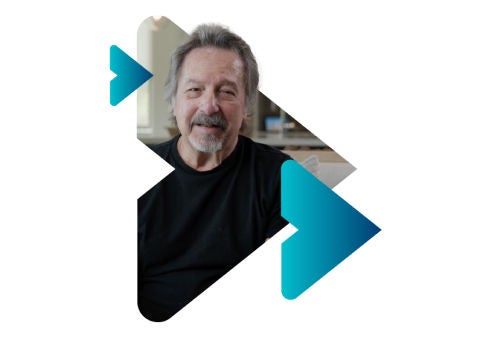
“I can pretty much do anything that I want to do.”
— Michael, patient who had the Intracept Procedure
See if the Intracept Procedure may be right for you.
- What’s vertebrogenic low back pain?
- FAQ about Intracept
If you have chronic low back pain that seems to get worse with activities such as bending forward, lifting, and/or sitting for long periods of time, you may have vertebrogenic low back pain.

Your spine is made of bones, called vertebrae, and discs, which act like cushions between the bones. Over time or after an injury, the connection points between the vertebrae and discs can become damaged.
This damage can irritate a nerve found inside the vertebrae called the basivertebral nerve. This nerve sends pain signals to your brain, causing vertebrogenic low back pain.


Vertebrogenic pain can be diagnosed through a physical exam and an MRI that shows specific changes called Modic changes.
This minimally invasive outpatient procedure uses heat from radiofrequency ablation to stop the basivertebral nerve from sending pain signals to the brain.
Yes, it has been proven to reduce pain and improve activity in most people with vertebrogenic low back pain.4–10 Five years after a single Intracept Procedure:
- 69% of patients were back to the activities they enjoyed before back pain4
- 65% were still experiencing pain relief4
Pain relief can begin as early as two weeks after the procedure, and many people who have the procedure continue to improve over time.6
Unlike other major back surgeries, the Intracept Procedure is a minimally invasive outpatient procedure. Your doctor will make just a small incision to deliver targeted treatment. There’s nothing left behind in your body.
Yes, studies have shown that the Intracept Procedure has a similar safety profile to steroid injections.6,11 The risk of complications is low: less than 0.3% noted in clinical trial data.12
It’s a same-day outpatient procedure that generally lasts about an hour. Most people go home the same day and can get back to normal activities within several days.
Yes, patients are overwhelmingly satisfied with the Intracept Procedure.
- Nearly 80% of people who’ve had the Intracept Procedure would do it again.6
- 74% of people who’ve had the Intracept Procedure say they are satisfied with the results.4
Most insurance plans, including Medicare, cover the Intracept Procedure, and Boston Scientific is continually advocating on behalf of patients to increase coverage.
Take the next step toward reclaiming your life.
Find a doctor who performs the Intracept Procedure
When you're ready, use our Find a Doctor tool to find a doctor trained on the Intracept Procedure near you.
Enter your zip code below to search for local doctors ready to speak with you about the Intracept Procedure. There may be additional doctors in your area who offer the procedure.

Center of Excellence
Designation provided to physicians who have achieved a high level of training and experience with the Intracept Procedure and demonstrate a commitment to maintaining a high level of proficiency in performing the Procedure.
1
Note: Names and details are provided by the listed physician for your information only. Decisions regarding choice of physician and treatment are a patient’s responsibility, as is all communication and interaction provided by the listed physician(s) for your information only. Physicians listed on the Physician Locator pay no fee for inclusion. Physicians listed have a business relationship with Boston Scientific which includes one or more of the following: purchase of product, provide consulting services to and/or be a party to a co-marketing agreement. Boston Scientific makes no representations or warranties regarding, and is not responsible for, the competencies or skill level of any of the physicians listed on the Physician Locator or the quality of their procedural outcomes.
As of 2024, the following criteria will govern listing on the Physician Locator.
- Successfully completed their initial Intracept Procedure training.
- Performed at least 5 successful Intracept Procedures within the preceding 6 months so as to demonstrate a commensurate level of skill, competence, and familiarity with the Intracept Procedure. A procedure with patient complaints does not satisfy this criteria.
- To be added back to the Physician Locator, a physician must perform at least 5 successful Intracept Procedures within the preceding 6 months.
- Additionally, Boston Scientific Physician Faculty that train and educate their peers at Boston Scientific-sponsored programs meet eligibility requirements.
Boston Scientific may remove a physician from the Physician Locator at any time and without notice should Boston Scientific conclude that any of the following has occurred: (i) failure to satisfy the criteria to qualify for listing; (ii) discontinuing performing the Intracept Procedure with sufficient frequency to demonstrate a high degree of skill and competency; (iii) any alleged or suspected violation of a federal or state law governing healthcare professionals and/or the practice of medicine; and/or (iv) any action related to a physician’s professional license, or the actual revocation of a license.
In addition, a small percentage of providers may qualify to be designated as an Intracept Procedure Center of Excellence.
The Intracept Procedure Center of Excellence (COE) Program is designed to highlight chronic low back pain (CLBP) physicians who specialize in the Intracept Procedure and consistently strive to deliver excellent patient outcomes and experiences. Physicians included in the COE Program have achieved a high level of training and experience with the Intracept Procedure and demonstrate a commitment to maintaining a high level of proficiency in performing the Procedure.
To qualify for our Intracept COE designation, a physician must meet the following additional criteria:
- Participate in the 12-month period prior to submission for designation or re-designation in a minimum of:
- Two Boston Scientific Professional Education-led educational events for initial designation, and
- One Boston Scientific Professional Education-led education event per year for re-designation.
- Complete a minimum of 30 Intracept cases in the 6-month period prior to submission for designation and maintain at least 3 cases per month average annually (i.e. 36 total annual cases) for re-designation.
- Attest to tracking patient outcomes.
- Have an active website presence which includes education information pertaining to Intracept.
- Complete a minimum of one patient-facing or referring physician education activity in the 12-month period prior to submission for designation.
- Participate in a minimum of two Program Reviews per year to review patient outcomes, latest clinical data and discuss best practices.
Depending on the month of initial designation, COE physicians will be required to complete annual re-designation requirements to obtain re-designation for the following year.
- If designated between January-June, physician is redesignated the following June.
- If designated between July-December, physician is redesignated the following December/January.
References
1. Coluccia A, Pozza A, Gusinu R, Gualtieri G, Muzii VF, Ferretti F. Do patients with chronic low-back pain experience a loss of health-related quality of life? A protocol for a systematic review and meta-analysis. BMJ Open. 2020;10:e033396.
2. Georgetown University Health Policy Institute. Chronic back pain. hpi.georgetown.edu/backpain/. Accessed March 12, 2025.
3. Gore M, Sadosky A, Stacey BR, Tai K-S, Leslie D. The burden of chronic low back pain: Clinical comorbidities, treatment patterns, and health care costs in usual care settings. Spine. 2012;37:E668–E677.
4. Khalil JG, Truumees E, Macadaeg K, Nguyen DTD, Moore GA, Lukes D, Fischgrund J. Intraosseous basivertebral nerve ablation: A 5-year pooled analysis from three prospective clinical trials. Interv Pain Med. 2024;3:100529. doi:10.1016/j.inpm.2024.100529.
5. Conger A, Burnham TR, Clark T, Teramoto M, McCormick ZL. The effectiveness of intraosseous basivertebral nerve radiofrequency ablation for the treatment of vertebrogenic low back pain: An updated systematic review with single-arm meta-analysis. Pain Med. 2022;23:S50–S62.
6. Fischgrund JS, Rhyne A, Macadaeg K, et al. Long-term outcomes following intraosseous basivertebral nerve ablation for the treatment of chronic low back pain: 5-year treatment arm results from a prospective randomized double-blind sham-controlled multi-center study. Eur Spine J. 2020;29:1925–1934.
7. Koreckij T, Kreiner S, Khalil JG, Smuck M, Markman J, Garfin S. Prospective, randomized, multicenter study of intraosseous basivertebral nerve ablation for the treatment of chronic low back pain: 24-month treatment arm results. N Am Spine Soc J. 2021;8:100089.
8. Smuck M, Khalil J, Barrette K, et al. Prospective, randomized, multicenter study of intraosseous basivertebral nerve ablation for the treatment of chronic low back pain:
12-month results. Reg Anesth Pain Med. 2021;46:683–693.
9. Macadaeg K, Truumees E, Boody B, et al. A prospective, single arm study of intraosseous basivertebral nerve ablation for the treatment of chronic low back pain: 12-month results. N Am Spine Soc J. 2020;3:100030.
10. Smuck M, Truumees E, Macadaeg K, Jaini AM, Chatterjee S, Levin J. Intraosseous basivertebral nerve ablation: Pooled long-term outcomes from two prospective clinical trials. Interv Pain Med. 2023;2:100256.
11. Mekhail N, Eldabe S, Templeton E, Costandi S, Rosenquist R. Pain management interventions for the treatment of chronic low back pain: A systematic review and meta-analysis. Clin J Pain. 2023;39:349–364.
12. Data on file.